Kennel Cough Symptoms: What That Honking Cough Means (Vet Verified)

If you’ve got questions about kennel cough, we’ve got answers. Learn the most common kennel cough symptoms, how long they usually last, what a honking cough sounds like, when to call your vet and more – and how Maven Pet can help you track it.
Kennel Cough Symptoms – The Short Answer
Kennel cough symptoms typically include a distinctive honking or hacking cough, retching, nasal discharge, and mild lethargy. Most cases are caused by Bordetella bronchiseptica and resolve within one to three weeks. If your dog’s cough is accompanied by fever, loss of appetite, or labored breathing, veterinary attention is needed. Monitoring resting respiratory rate and activity trends can help you catch early signs of worsening.
Key Takeaways
- The hallmark sign is a forceful, honking cough that may sound like your dog has something stuck in its throat
- Kennel cough is highly contagious and spreads in places where dogs congregate
- Most healthy adult dogs recover without medication in one to three weeks
- A dog cold and kennel cough share symptoms but differ in cause, severity, and contagion risk
- Worsening respiratory rate, fever, or loss of appetite are red flags that require a vet visit
- Tracking resting respiratory rate trends at home can help you identify deterioration early
What Are the Most Common Kennel Cough Symptoms?
Kennel cough formally known as infectious tracheobronchitis is a respiratory infection that inflames the trachea and bronchial tubes. According to the American Veterinary Medical Association (AVMA), the condition is caused by a combination of pathogens, most commonly Bordetella bronchiseptica and canine parainfluenza virus.
The most common signs of kennel cough in dogs include:
- Persistent honking or hacking cough often the first and most noticeable symptom
- Retching or gagging at the end of a coughing episode, sometimes producing white foam
- Runny nose and mild eye discharge
- Sneezing
- Mild lethargy your dog may seem slightly less energetic than usual
- Reduced appetite in moderate cases
Most dogs remain alert and active despite coughing. A dog that is extremely lethargic, feverish, or refusing food may have a more serious secondary infection and should be evaluated promptly.
What Does a Dog Honking Cough Sound Like?
The honking cough of kennel cough is one of the most recognizable sounds in veterinary medicine. It is a loud, forceful, and repetitive cough often described as sounding like a goose honk or a seal bark. It may be triggered by exercise, excitement, or pressure on the throat (such as from a collar).
“The classic honking cough of kennel cough is often easy to recognize, but monitoring changes in resting respiratory rate and overall behavior can help identify when a respiratory illness may be becoming more serious.” Carolina Domingues, DVM, Veterinarian at Maven Pet
Cornell University College of Veterinary Medicine notes that the cough is often described by owners as sounding like the dog has something lodged in its throat. Unlike a soft or muffled cough, the kennel cough honk tends to be sudden and startling. Episodes may last a few seconds or continue in bursts for several minutes, especially in the morning or after activity.
“I got the Maven sensor for my 14-year-old Chihuahua mix with heart and trachea issues. It gave me back peace of mind – I can track her RRR, BPM, drinking, and activity anytime and know instantly if something’s wrong. Highly recommend!”

★★★★★
Chiara De Luca
Titti
Why Does My Dog Keep Hacking and Coughing?
Repeated hacking episodes happen because the infection inflames and irritates the lining of the upper airway. Every cough temporarily relieves the sensation, but the underlying inflammation quickly triggers the next episode. Dogs may hack more frequently after:
- Physical exertion or play
- Drinking water quickly
- Wearing a collar that puts pressure on the trachea (switching to a harness can help)
- Waking from sleep
VCA Animal Hospitals explains that the cough itself is a protective reflex the body’s attempt to clear the airways but in kennel cough the irritation persists long after any debris has been removed, keeping the cycle going until the infection resolves.
If hacking is paired with labored breathing, blue-tinged gums, or collapse, this is a veterinary emergency.
Dog Cold vs Kennel Cough: What’s the Difference?
Dogs can catch respiratory viruses that produce cold-like symptoms, and it is easy to confuse a dog cold with kennel cough. Here is how to tell them apart:
| Dog Cold | Kennel Cough | |
| Cough type | Soft, wet, or occasional | Loud, dry, honking |
| Contagious to other dogs | Yes, but less so | Highly contagious |
| Cause | Various respiratory viruses | Bordetella + parainfluenza and other pathogens |
| Exposure risk | General | Boarding, dog parks, shelters |
| Duration | 1–2 weeks | 1–3 weeks |
| Appetite | Often maintained | May decrease in moderate cases |
According to Texas A&M University Veterinary Medicine & Biomedical Sciences, kennel cough spreads through airborne droplets and direct contact, making high-density environments like boarding facilities and dog parks the most common sources of exposure. A dog cold is more likely to develop after general environmental exposure without a specific high-risk contact event.
How Long Do Kennel Cough Symptoms Last?
In otherwise healthy adult dogs, kennel cough symptoms typically last one to three weeks. Puppies, senior dogs, and immunocompromised dogs may take longer to recover and face a higher risk of complications such as pneumonia.
The cough is usually most intense in the first week and gradually improves. Mild lethargy and nasal discharge typically resolve before the cough fully disappears. Your vet may recommend:
- Rest and limited exercise to reduce airway irritation
- Antibiotics if a bacterial infection is confirmed or suspected
- Cough suppressants in some cases to improve comfort
- A harness instead of a collar to reduce throat pressure
What Symptoms Require Veterinary Attention?
Most cases of kennel cough are self-limiting, but certain signs indicate the infection may be progressing or a secondary complication has developed. Seek veterinary care if your dog shows:
- Fever (rectal temperature above 39.4°C / 103°F)
- Labored or rapid breathing at rest
- Significant loss of appetite lasting more than 24–48 hours
- Extreme lethargy or weakness
- Cough producing green or yellow mucus
- Symptoms that worsen after the first week rather than improving
Pneumonia is the most serious complication of kennel cough, particularly in young puppies and dogs with pre-existing health conditions. The earlier it is caught, the more straightforward the treatment.
How Maven Helps
Kennel cough can be hard to track by observation alone. The intensity of coughing does not always reflect what is happening with your dog’s respiratory system, and it can be difficult to tell whether symptoms are improving or subtly worsening day to day.

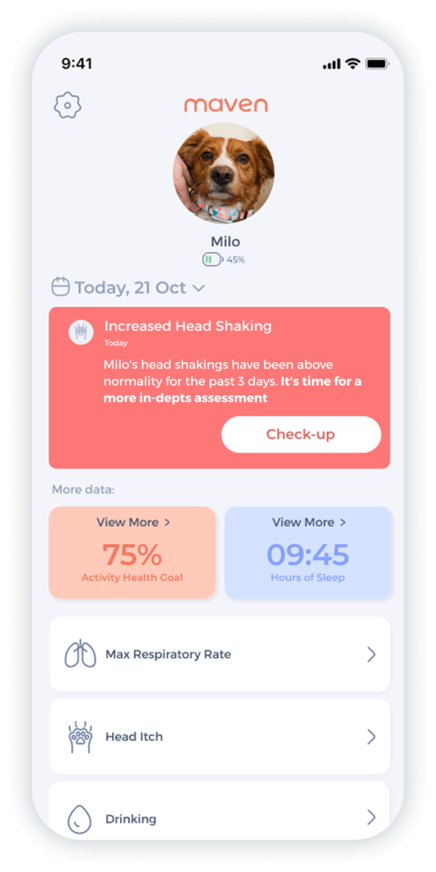
Monitor heart rate, respiratory rate, activity & rest, drinking, itch behavior.
The Maven Pet Health Monitor helps owners track respiratory health trends when kennel cough symptoms appear. Using the Maven pet health app, you can monitor:
- Resting respiratory rate continuously tracked, with alerts when breathing rate rises outside your dog’s personal baseline
- Activity levels detects reduced energy during illness and helps confirm whether recovery is progressing
- Rest patterns identifies disrupted sleep that may accompany respiratory distress or discomfort
- Heart rate trends changes during illness or stress are captured and logged
- Water intake fluctuations that may indicate changes in overall wellness
The dog health tracker builds a personalized baseline for each dog’s normal respiratory and activity patterns. Rather than relying on cough frequency alone, you can see objective trend data and know with greater confidence whether it is time to call your vet or stay the course at home.
FAQ (Vet-Reviewed)
The first sign is usually a sudden, persistent honking cough. This may be followed by retching, mild nasal discharge, and slightly reduced energy. Symptoms typically appear two to fourteen days after exposure.
A honking cough is the characteristic sound of kennel cough. It is caused by inflammation of the trachea and upper airways, which triggers a forceful, repetitive cough reflex. It is distinct from a soft or wet cough and usually sounds sudden and startling.
Persistent hacking is caused by ongoing irritation of the airway lining. The infection triggers a cycle of coughing that temporarily relieves the sensation but does not resolve the underlying inflammation. Activity, collar pressure, and drinking water can all trigger episodes.
Kennel cough produces a distinctive dry, honking cough and is highly contagious, especially after contact with other dogs in shared spaces. A dog cold tends to produce a softer cough with more general cold-like symptoms and is less likely linked to a specific exposure event.
See a vet if your dog develops fever, labored breathing at rest, loss of appetite, extreme lethargy, or if symptoms worsen after the first week. Puppies and senior dogs should be seen sooner, as they are at higher risk of complications.
Conclusion
Kennel cough is one of the most common respiratory illnesses in dogs, and its hallmark honking cough is usually unmistakable once you know what to listen for. Most healthy dogs recover fully within a few weeks with rest and supportive care. The key is knowing which symptoms signal a normal recovery and which ones warrant a call to your vet.
Tracking your dog’s resting respiratory rate and activity trends with a tool like the Maven Pet Health Monitor gives you objective data to complement what you observe so you can make confident decisions throughout your dog’s recovery.
Maven Pet focuses on improving the quality of life of our pets with technology, using artificial intelligence (AI) to enable proactive pet care. By accurately collecting and monitoring pet data 24/7 and flagging any irregularities, Maven Pet empowers pet parents and veterinarians to stay ahead of potential health issues, ensuring the well-being and longevity of our beloved companions.